Stop Doomscrolling in 3 Minutes: The Simple Mental Reset Busy Professionals Actually Use
- Chaitanya Prabhu
- Feb 27
- 6 min read

You know that feeling, don't you? The one where you unlock your phone to check one notification: just one: and suddenly twenty minutes have dissolved into the endless scroll. Your thumb moves mechanically, flicking through headlines about crises you cannot solve, arguments between strangers you'll never meet, before-and-after photos that make you question your own progress. The light from your screen casts a cold glow on your face, and somewhere in the back of your mind, a small voice whispers that you have work to do, emails to answer, a presentation to finish. But the scroll continues.
This is the texture of modern distraction: smooth glass under your fingertip, an infinite feed designed to keep you tethered, the peculiar heaviness that settles in your chest when you finally look up and realize how much time has passed. It's not that you're weak-willed or lazy. You're caught in a loop that exploits how your brain processes novelty and threat, a cycle engineered to be nearly impossible to escape through willpower alone.
But here's what busy professionals who've reclaimed their attention have discovered: you don't need an hour of meditation or a digital detox retreat to break free. You need exactly three minutes and a technique so simple it almost sounds too easy to work.
The One-Song Reset: Your Emergency Exit from the Scroll

The moment you catch yourself doomscrolling: and you will catch yourself, because awareness is the first breakthrough: do this: stop wherever you are. Place your phone face down on the table, the desk, your lap. Not in another room (we're being realistic here), just face down. Out of sight.
Now, play one song. Any song. It can be the opening theme from your favorite show, a jazz standard that reminds you of lazy Sunday mornings, a pop anthem that makes you want to dance in your kitchen. The only rule is this: you must listen to the entire song from start to finish while doing absolutely nothing else.
This is harder than it sounds. Your fingers will itch. Your mind will serve up perfectly reasonable justifications for "just checking one more thing." Let them pass like clouds drifting across an open sky. For three to four minutes, your only job is to hear the music: the guitar's opening riff, the breath the singer takes before the chorus, the way the drums layer beneath the melody.
What you're doing in these stolen minutes is retraining your nervous system to remember what sustained attention feels like. You're proving to yourself that you can, in fact, focus on one thing for longer than the seven-second attention span social media has conditioned in you. The music becomes your anchor, pulling you back from the fragmented state of constant scrolling into something approaching presence.
Why Three Minutes Changes Everything
There's neuroscience behind this seemingly simple act. When you doomscroll, your brain enters a state of continuous partial attention: always scanning, never settling, perpetually anticipating the next hit of novelty or outrage. This state floods your system with cortisol, the stress hormone, while simultaneously triggering dopamine spikes that keep you coming back for more. It's exhausting and addictive in equal measure.
The one-song reset interrupts this pattern at the neurological level. By forcing your attention to remain on a single stimulus: the song: you activate your parasympathetic nervous system, the part responsible for rest and restoration. Your breathing naturally deepens. Your shoulders drop slightly. The tight, scattered feeling in your chest begins to ease.

More importantly, you break the automaticity of the behavior. Doomscrolling thrives on mindlessness, on the way your thumb moves before your conscious mind even registers the decision to scroll. By inserting this three-minute pause, you create space between impulse and action. And in that space, choice becomes possible again.
The Five-Minute Interrupt (For Those Really Stuck Days)
Some days, the grip is stronger. You catch yourself scrolling, you know you should stop, but the one-song reset feels like too much of a leap. For these moments, try the five-minute interrupt instead.
This technique requires even less effort initially: catch yourself mid-scroll, set a timer for five minutes, and simply pause. You don't have to put your phone down. You don't have to do anything productive. Just stop scrolling for five minutes. Sit with the urge. Notice how it feels in your body: the restlessness in your fingers, the mild anxiety that surfaces when you're not consuming information, the strange emptiness that opens up when you're not distracted.
Nine times out of ten, by the time the timer sounds, the compulsive urge has passed. The crisis that seemed so urgent to follow, the argument you felt compelled to read through: they've lost their grip. You look at your phone and think, clearly now, "Do I actually want to go back into that?" Often, the answer is no.
Quick Resets for the 3-Minute Window

If the one-song reset isn't clicking for you today, here are alternatives that work within the same three-minute framework:
Breathe with intention. Close your eyes. Take one deep breath, filling your lungs completely, feeling your ribs expand. Hold it for a count of four. Release it slowly. Then another. And another. This is mindfulness at its most elemental: no apps required, no special posture, just you and your breath reminding your body that this moment is safe, that there's no emergency requiring your immediate attention.
Move your body. Stand up from your desk. Walk to the window. Do three jumping jacks in your living room. Roll your shoulders, stretch your arms overhead, shake out your hands. Physical movement shifts your neurological state faster than almost anything else, pulling you out of the scroll-induced stupor and into your actual, present-moment body.
Create something tiny. Open your notes app and write one sentence about what you see outside your window. Sketch a quick doodle of your coffee mug. Record a ten-second voice note describing how you're feeling. This micro-act of creation shifts your brain from passive consumption to active expression. You're no longer a recipient of others' thoughts and images: you're generating something of your own, however small.
Phone a friend. Send a text to someone you actually care about: not a reaction to their story, but a real message. "Thinking of you today. Hope you're doing well." Or call them if you're feeling brave. Thirty seconds of genuine human connection regulates your nervous system more effectively than thirty minutes of scrolling through strangers' opinions ever could.
Making the Reset Sustainable
Here's the truth about breaking the doomscroll habit: the reset technique works brilliantly in the moment, but if you don't change your digital environment, you'll be fighting the same battle fifty times a day. So make it easier on yourself.
Move your news apps off your home screen. Not deleted: we're not being absolutist here: just moved to a folder on page three where they require intentional seeking rather than automatic tapping. Switch your phone to grayscale mode in the evenings; without color, social media feeds lose much of their psychological pull. Set a passcode on your most-used apps, something simple but requiring one extra step. That tiny friction: the need to type four digits: creates just enough pause for your conscious mind to ask, "Wait, do I actually want to open this right now?"
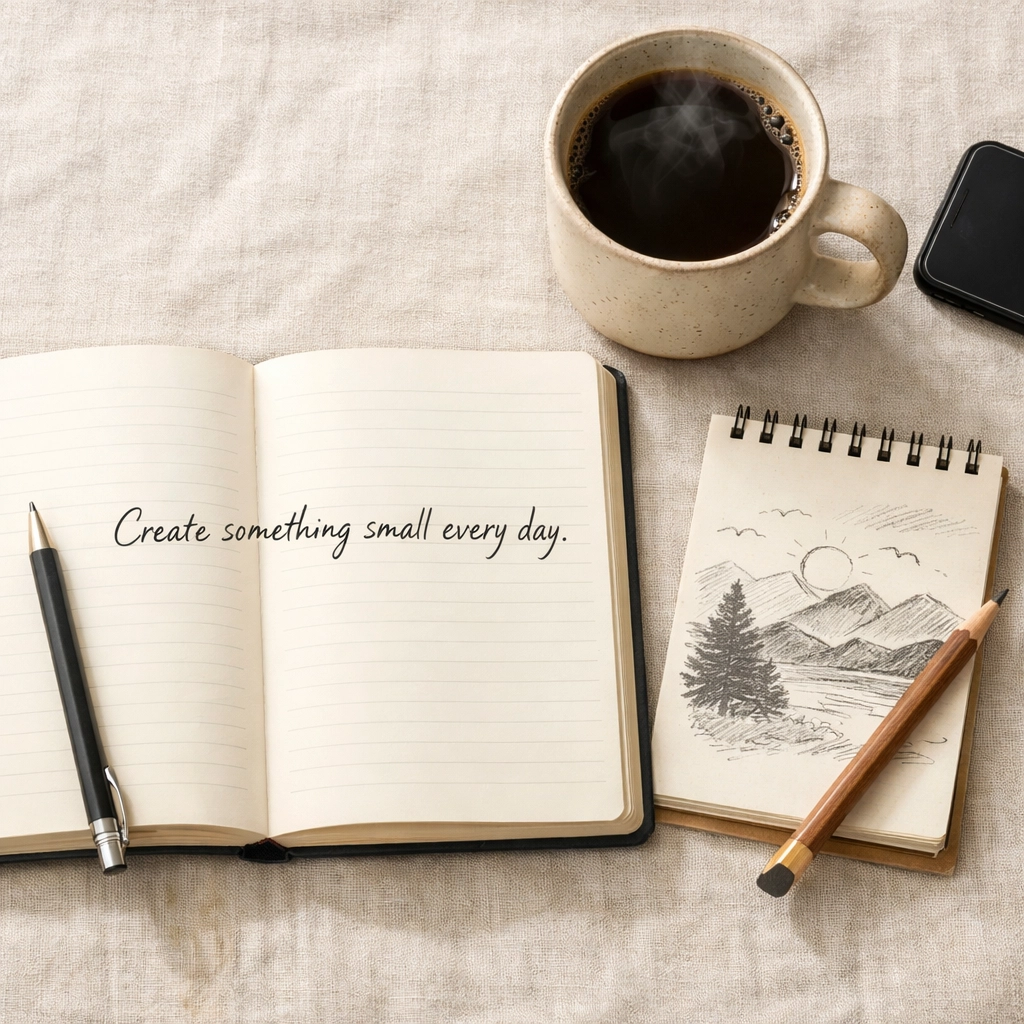
Think of these adjustments as designing your environment for the person you want to be, not the person the algorithm wants you to become. You're not fighting yourself; you're making the better choice the easier choice.
The Real Work: Reclaiming Your Attention
What you're doing with these three-minute resets isn't just stopping a bad habit. You're reclaiming something precious that was taken from you without your full consent: your attention, your time, your mental clarity. You're proving to yourself that you can notice the trap, step out of it, and choose something different. This isn't about perfect execution or never scrolling again. It's about recognizing when you've been pulled under and having a reliable way to surface.
Try the one-song reset today. Tomorrow, when you catch yourself scrolling again (and you will), try it again. Notice what changes: not just in your screen time statistics, but in the quality of your awareness throughout the day. Notice the small victory of choosing three minutes of presence over thirty minutes of distraction.
Your attention is yours to give. Not theirs to take.
The scroll can wait. The song cannot.
Comments